

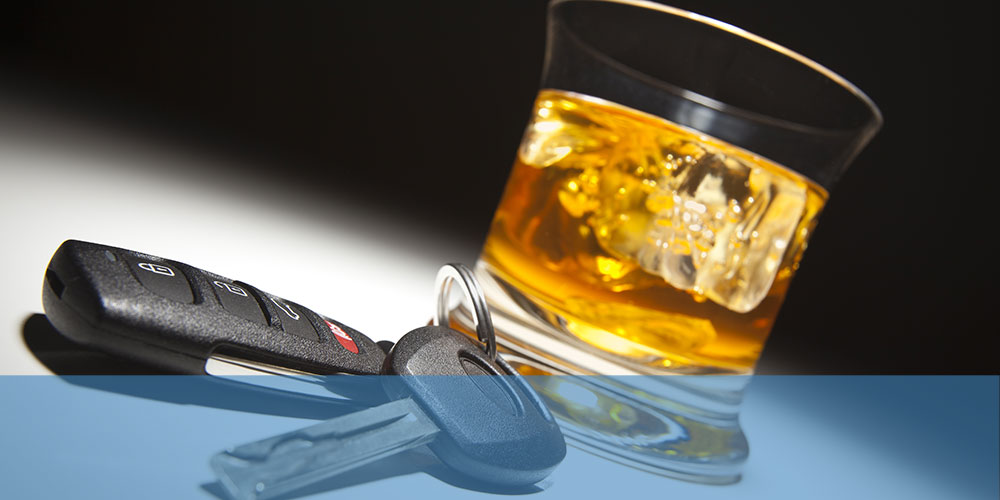







Portable Breath Test in Ohio
As part of many DUI / OVI investigations in Ohio, law enforcement will ask the person suspected of driving under the influence to submit to a Portable Breath Test (“PBT”). The primary reason why law enforcement uses the PBT is that people tend to be more cooperative after submitting to the PBT because the person believes that evidence gathered by the PBT can be used against them in their DUI / OVI case.
Can the Portable Breath Test Be Used Against You in Court?
It is important to understand, however, that in Ohio, the portable breath testing device is not considered a breath test instrument that can be used for evidentiary purposes. Ohio Revised Code (ORC) 4511.19 provides that in a prosecution for a violation of any of its sections, a bodily substance that is withdrawn, whether it is blood, breath or urine, “shall be analyzed in accordance with methods approved by the director of health.” ORC 3701.143 states that the Director of Health determines which techniques and methods are to be used for ascertaining the amount of alcohol in a person’s blood, urine or breath.
The regulations governing these techniques and methods are found in the Ohio Administrative Code (OAC), specifically § 3701-53. OAC 3701-53-02 addresses the analysis of breath samples for a violation of ORC 4511.19. The only approved instruments are the BAC Datamaster, BAC Datamaster K, BAC Datamaster cdm, Intoxilyzer model 5000 series 66, 68 and 68 EN, and Intoxilyzer 8000. No provision under the OAC permits the use of portable breath testing devices for analysis of breath samples at any stage of a prosecution under ORC 4511.19.
Thus, the Portable Breath Test is not approved by the Ohio Department of Health as a breath-testing instrument. Therefore, the results of the PBT cannot be used against you at trial. See State v. Shuler. In Shuler, the 4th District Court of Appeals denied a defendant’s motion to admit the results of a portable breath test at trial in order to show that he tested below the legal limit. The court held that such results were “unreliable” and “untrustworthy” evidence.
Portable Breath Test and Probable Cause Determination
Some jurisdictions in Ohio, however, permit the use of the PBT results to determine probable cause. Probable cause is not usually a trial issue, but is challenged before trial. The state must demonstrate that the police officer had “information from a reasonably trustworthy source of facts and circumstances sufficient to cause a prudent person to believe the suspect committed the act in question.” See State v. Homan.
The majority of appellate courts in Ohio have held that the PBT is inadmissible in determining whether an officer had probable cause to arrest a suspect for DUI / OVI. Even in districts where the PBT is admissible for probable cause determinations, the results may be considered “solely as a factor to consider in the totality of the circumstances for establishing probable cause.” See State v. Gunther.
What if I Refuse the Portable Breath Test?
In Columbus v. Dials, the 10th District Court of Appeals addressed the question of the admissibility of a refusal to submit to a portable breath test. In holding that the defendant’s refusal to submit to the portable breath test was not admissible, the court found that the test was “not reasonably reliable and thus it was error for the trial court to permit testimony regarding appellant’s refusal to submit to the portable breath test.”
Columbus and Delaware, Ohio DUI / OVI Attorney
If you have been charged with DUI / OVI in Columbus or Delaware, Ohio, contact Johnson Legal, LLC and speak with an experienced criminal defense attorney. Attorney David Johnson of Johnson Legal, LLC will discuss your case and assist you in fighting the charges. Call (614) 987-0192 or send an email to schedule a consultation regarding your DUI / OVI case.